
Written by Ewa Mikrut, BACP Member & Creative Arts Counsellor specialising in ADHD, autism and young people.
When a child feels anxious, it rarely shows up as calm words about what is wrong. It can look like a tight stomach before school, a sudden refusal to leave the house, restless fidgeting that will not settle, or a child sitting quietly against the wall instead of joining in. If you have found yourself asking why is my child so anxious, the short answer is that something in their day currently feels bigger, more uncertain, or faster than the support their body and mind have to meet it right now.
This is the second post in Emotions Explained, a series looking closely at the feelings that bring families to online creative counselling in the UK. This post is written for the parents, carers and teachers around an anxious child, rather than for the child themselves, because so much of what eases a child's anxiety begins with the adults holding the space around them.
Why is my child so anxious in the first place?
Anxiety in a child often builds when thinking, feeling and doing fall out of balance. A day spent almost entirely in the thinking part of a child, working things out, following instructions, sitting still and taking in information, can leave the feeling and doing parts of them with nowhere to go.
When that happens, especially for younger children, it can create a real sense of panic: too much to hold, too much to work out, and no outlet for any of it. That is often where the physical signs come from, the trembling, the shutdown, the behaviour that looks like defiance but is really overwhelm.
An anxious child is not overreacting to nothing. Their body is reacting to more than their current capacity can comfortably hold.
Why do some children show anxiety differently to others?
Anxiety does not always look like worry. One child might sit apart, arms folded, watching rather than joining in, waiting until something feels safe enough to try. Another might seem restless, chatty or fidgety, the opposite of what most people picture when they imagine an anxious child, even though that scattered energy can be anxiety wearing a different coat.
For autistic children, anxiety often rises with unpredictability. An unclear plan, a sudden change, or an ambiguous social moment can generate real distress that has little to do with how risky the situation actually is.
For children with ADHD, restlessness or constant chatter can be the visible edge of a mind moving through several worries at once, faster than it can settle on any single one of them.
None of this means something is wrong with your child. It means their nervous system is reading the day as more urgent than another child's might, and it needs a different kind of support, not more willpower, to feel steady again.
How does using their hands help an anxious child settle?
When a child is stuck almost entirely in their head, thinking, worrying, trying to work it all out, giving them something to do with their hands can bring them back into balance far more effectively than asking them to talk it through.
Picture a child arriving partway through the school year, already anxious about being new, choosing to sit at the edge of the room rather than join in. When the class is offered a hands-on building challenge, working out how to protect something fragile using only their hands and a few simple materials, curiosity can win over caution within minutes. Using their hands, rather than being asked to explain how they feel, becomes the child's own way back into the room.
In another example, a child whose anxiety showed up as fidgeting rather than withdrawal was given a simple, repetitive, tactile task away from the noise of the group, sorting shapes by touch alone. Within minutes his body visibly settled. It was not a chore to him. It was somewhere his hands could go while the rest of him caught up.
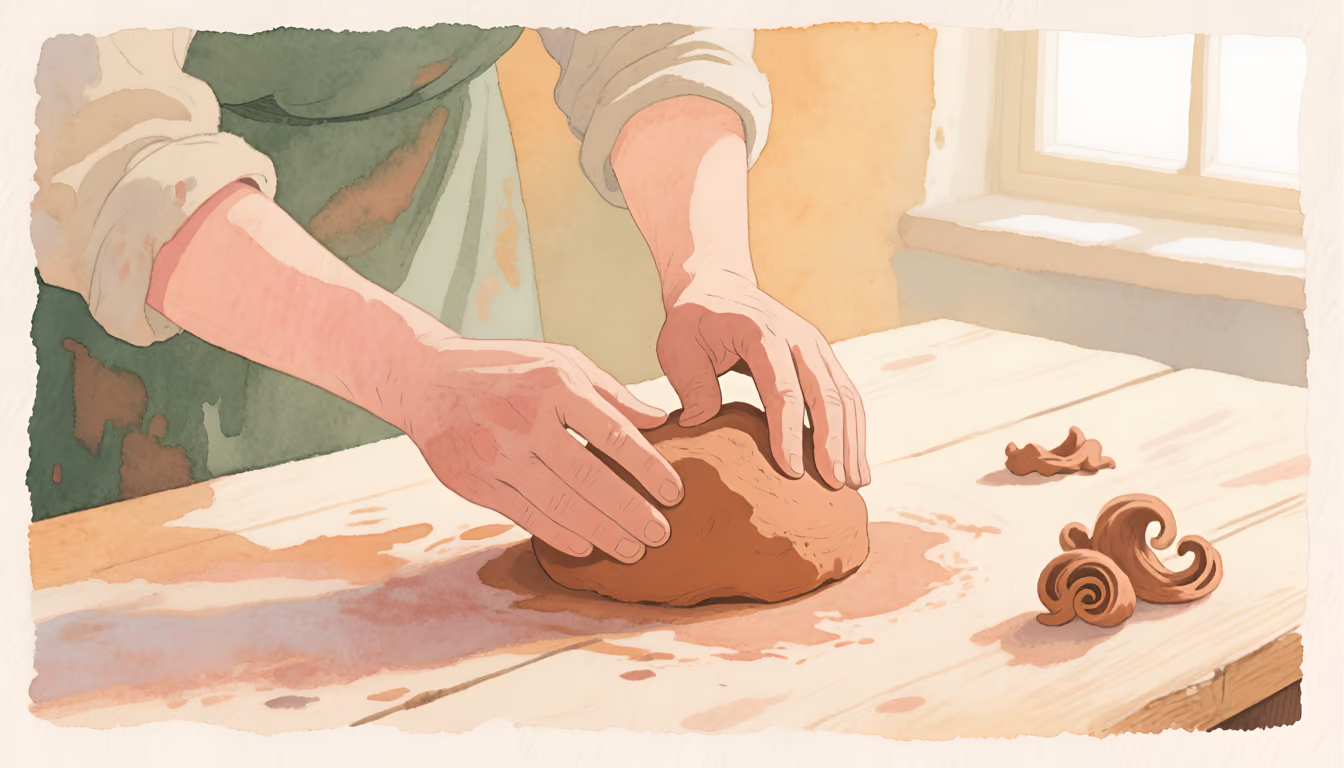
In my own sessions I notice something similar. A child who cannot say what is wrong will often pick up clay or a paintbrush, and within minutes their body softens before a single word about the worry has been spoken.
In the Tobias tradition I trained in, this is not a distraction technique. It is a way of letting the hands hold something the mind is not yet ready to put into words.
Does a parent's own anxiety affect their child?
Yes, often more than we realise, and this is one of the harder things to say plainly, because no parent wants to hear that their own state might be part of the picture. It is not about blame. It is about awareness.
A child can pick up far more than what is said out loud. If a parent is hurried, anxious, or carrying their own fear or uncertainty, a child often senses it, even without being told anything is wrong.
This does not mean becoming a different person. It means noticing what you are carrying into the room, and asking small, honest questions: am I rushing? Am I anxious right now? Is this the right moment to take my child somewhere loud and unpredictable, like a busy shopping centre on a Saturday morning?
You do not have to become calm to help an anxious child. You only have to become aware of what you are bringing into the space around them.
How can I help my anxious child without trying to fix them?
You cannot fix an anxious child, and trying to can leave you just as hurried and unsettled as they are. What you can do is make their day a little easier to carry.
It can be tempting to ask directly, what do you need to feel better? For a child who is already anxious, this question can backfire. It hands them the responsibility of solving something they do not yet have the words or capacity to solve, and it can quietly add shame on top of the anxiety that is already there.
Instead, that responsibility sits with the adult: watching, noticing, and adjusting the day, rather than asking the child to name the fix themselves.
You are not responsible for making your child never feel anxious again. You are responsible for making the day in front of them a little easier to carry.
How can rhythm and small routines help an anxious child feel safe?
Safety for an anxious child is rarely built through one big conversation. It is built through the same small, predictable moment, repeated often enough that the body learns to expect it.
This does not need to be elaborate. Lighting a candle before a bedtime story, singing the same short song before lights out, or following the exact same few steps before leaving the house each morning, small, repeatable moments like these tell a child's nervous system, this part of the day is safe, I know what happens next.
You do not need to fill every hour with structure to meet this need. A single steady moment, done the same way each day, can carry more weight than an entire afternoon of trying to get everything right.
What can you do right now if your child seems anxious?
If you would like something to try today, before any deeper work, this short exercise can help you see where the balance in your child's day has tipped too far toward thinking and not far enough toward doing.
1. Notice the shape of the day. How much of it is spent thinking, sitting still, following instructions, versus using hands, moving the body, or resting?
2. Add one small hands-on moment. It does not need to be big: drawing, building, kneading dough, sorting objects, anything that uses the hands rather than words.
3. Choose one repeated moment to turn into a small ritual. Leaving the house, bedtime, coming home from school, pick one and do the same small thing, in the same way, every time.
4. Check your own state before a known trigger. If somewhere loud or unpredictable can wait, let it wait until your child, and you, have more capacity to meet it.
5. Let one small win be enough. You are not trying to solve the anxiety today. You are trying to ease it, one small, repeated moment at a time.
None of this will make an anxious child's anxiety disappear overnight, and it is not meant to. Over time, though, children who are given this kind of support tend to learn to manage themselves, so the anxiety becomes something they carry alongside their day, rather than something that runs it.
Reflection: Where in my child's day is there too much thinking and not enough doing? What is one small, repeated moment I could build in today?
Frequently Asked Questions
Why is my child so anxious all of a sudden?
Sudden anxiety in a child is often triggered by a change, even a small one, such as a new class, a change in routine, or a shift within the family. It does not always come from one obvious cause, so it is worth looking at what has recently changed in their world rather than assuming something is deeply wrong.
Is it normal for an anxious child to seem calm, or even a bit silly, instead of visibly worried?
Yes. Anxiety in children does not always look like worry on the outside. Fidgeting, chatter, clowning around or complete stillness can all be a child's way of managing a feeling they do not yet have words for.
Why does giving a child something to do with their hands help with anxiety?
A hands-on task gives an overloaded, thinking mind somewhere else to go. It lets the body and the feelings take part alongside the thinking, rather than leaving a child stuck circling the same worry in their head.
Does my own anxiety as a parent really affect my child?
Often, yes. Children pick up on a parent's hurried pace, tone and unspoken tension, even when nothing is said directly. Becoming aware of what you carry into the room, without judging yourself for it, is one of the most useful things you can do.
Can creative counselling help an anxious child, even online?
Yes. Online creative counselling works well for anxious children, since simple materials like paper, colour or clay, combined with a private, unhurried space, give a child a way to process what they are feeling without needing to explain it in words first.
A note on professional support
Everything above is general information to help you understand and support an anxious child, not a diagnosis or a substitute for individual professional support. If your child's anxiety is affecting their daily life, sleep, eating or ability to attend school, your GP is a good starting point.
You can find further information and support through Young Minds. If things ever feel urgent or unsafe, Samaritans are available free, 24/7, on 116 123, or you can text SHOUT to 85258.
Ready to explore this for yourself?
If any of this resonates, I would love to hear from you. You can try the reflection above whenever it is useful, or book a free 20-minute introductory call to find out whether creative counselling could support your child, and you, moving forward.