
Written by Ewa Mikrut, BACP Member & Expressive Arts Counsellor specialising in ADHD, autism in children, young people and adults.
If everything feels like too much right now, too loud, too fast, too many things at once, that feeling has a name: overwhelmed. It is what happens when the demands on you, inside or out, outpace your capacity to process them in the moment. It is not weakness and it is not a character flaw. It is a very human signal that something needs to slow down.
This is the first post in Emotions Explained, a series looking closely at the feelings that bring people to online creative counselling in the UK, especially teenagers, ADHD adults and autistic adults who often experience these states more intensely and more often.
What does it actually mean to feel overwhelmed?
Overwhelmed describes the point where the amount you are holding, tasks, decisions, sensations, emotions, exceeds what your system can process at once. It is less a single feeling than a flood of several feelings arriving together, with nowhere obvious to put any of them down.
Physically, it often shows up as a tight chest, a racing mind that will not settle on one thought, or the opposite: a strange flatness where you cannot seem to start anything at all. Both are the same signal wearing different clothes.
A quotable way to hold this: overwhelmed is not one feeling, it is several feelings stacked so high you can no longer tell them apart.
I often notice that clients describing overwhelm reach for the same word without realising it: too. Too much, too fast, too many. Naming that pattern out loud is often the first small relief in the room.
Why do some people feel overwhelmed more easily than others?
Capacity for processing input is not the same for everyone, and that is not a personal failing, it is neurology. For autistic people, sensory input, noise, light, texture, unspoken social rules, can arrive with far less filtering, meaning a day that looks ordinary from the outside can be genuinely flooding from the inside.
For people with ADHD, overwhelm often builds through a different route: working memory fills up quickly, time can feel harder to judge, and the gap between how much there is to do and how much bandwidth is available closes fast, often without much warning.
None of this means something is wrong with you. It means your nervous system is taking in more, or processing it differently, and it needs different support to recover its balance, not more willpower.
Is feeling overwhelmed the same as anxiety?
They overlap, but they are not identical. Anxiety tends to centre on a specific worry about what might happen. Overwhelmed is broader, it is about volume and pace rather than a particular fear, and it can happen even when nothing is objectively wrong, such as at the birth of a longed-for baby or a happy but very full wedding day.
Grief, joy, love and pressure can all tip into overwhelm if they arrive with enough intensity or speed. Whatever has brought you here, the feeling itself is valid, and it will pass. It always does.
How can creative counselling help when everything feels like too much?
Talking through an overwhelming week, in order, with the right words, in real time, is itself a demanding task, sometimes exactly the kind of task that feels impossible when you are already flooded. Creative counselling offers a way in that does not ask for that first.
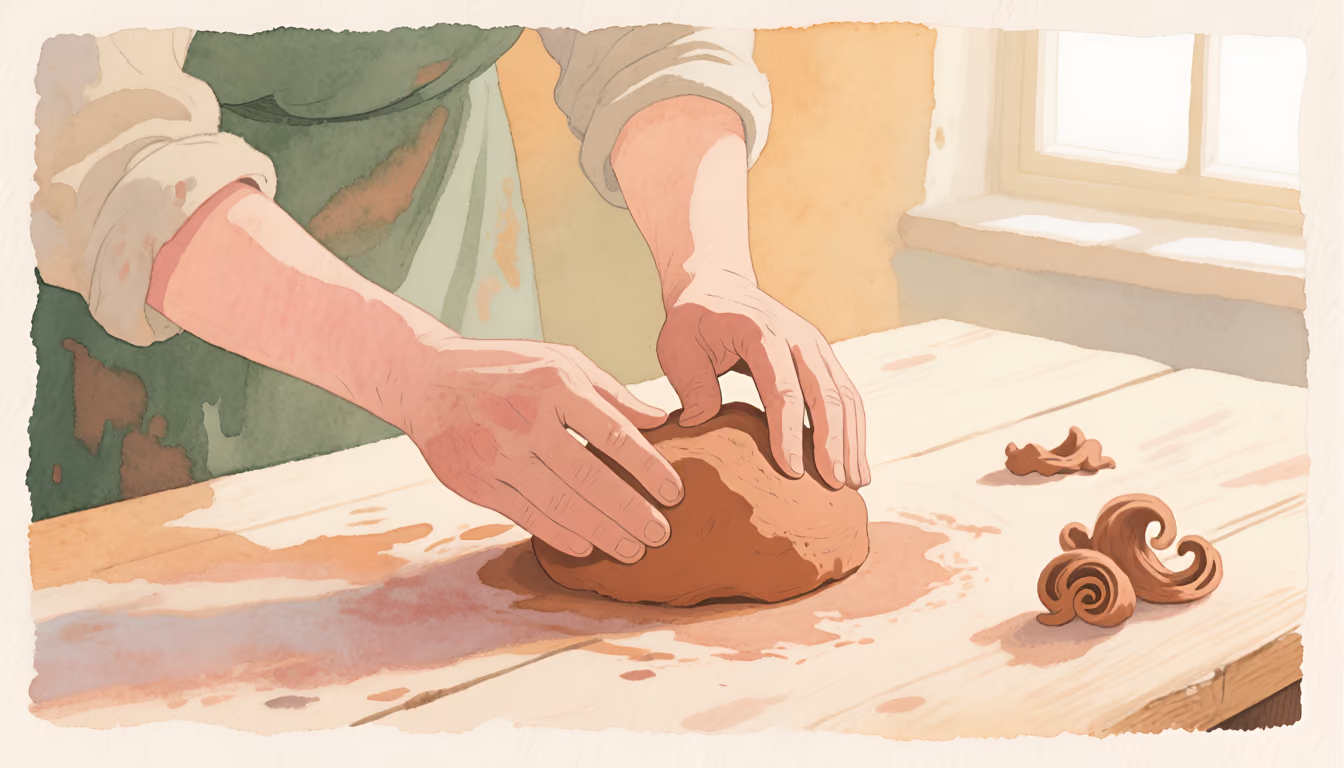
Working with colour, clay or image lets a feeling take shape before it has to become a sentence. This is not a technique to calm you down, it is a slower, more honest way of meeting what is actually there, at whatever pace feels safe, without rushing to fix or resolve it.
Sometimes the most useful thing in a session is not finding the answer. It is simply making the size of the feeling visible, so it stops being formless and starts being something you can actually work with.
What can you do right now if you feel overwhelmed?
If you need something immediate, before any of the deeper work, try this short sequence:
- Name it. Say or write, silently or out loud: I feel overwhelmed right now. Naming it takes it out of the fog slightly.
- Drop your task list for sixty seconds. Nothing needs deciding in the next minute.
- Find one small sensory anchor: cold water on your hands, your feet on the floor, one deep breath out longer than the breath in.
- Ask: what is the smallest possible next step? Not the whole list, just the next one thing.
- Take that one step, then check in with yourself again before deciding on the next.
This will not make overwhelm disappear, and it is not meant to. It is meant to bring you back into your body long enough to make one small, doable choice, which is usually enough to loosen the flood a little.
Frequently Asked Questions
Is it normal to feel overwhelmed for no clear reason?
Yes. Overwhelm can build gradually from many small pressures rather than one obvious cause, which makes it easy to miss until it peaks. You do not need a dramatic reason for the feeling to be real and worth taking seriously.
Why do I feel overwhelmed more than people around me seem to?
Nervous systems process input differently, and neurodivergent people, including those with ADHD and autistic people, often take in more sensory and cognitive information with less filtering. This is a difference in processing, not a lack of resilience.
Can feeling overwhelmed be a sign of something else, like burnout?
It can be. If overwhelm has become near-constant rather than occasional, it is worth exploring whether burnout, anxiety or another underlying pattern is involved, ideally with a qualified professional who can look at your full picture.
Does creative counselling help with overwhelm even online?
Yes. Online creative counselling works well for processing overwhelm, since materials as simple as paper and colour, combined with a private, unhurried space, are often more accessible from home than travelling to an in-person session.
Is there a free way to start working with this feeling before booking a session?
Yes. A free downloadable Overwhelmed activity worksheet (ages 13 to 17) offers guided writing and drawing prompts you can try at home, at your own pace, with no session required.
A note on professional support
Everything above is general information to help you understand this feeling, not a diagnosis or a substitute for individual professional support. If overwhelm is constant, overwhelming your ability to function day to day, or tipping into thoughts of harming yourself, please reach out for proper support.
You can find further information and support through Young Minds. If things ever feel urgent or unsafe, Samaritans are available free, 24/7, on 116 123.
If any of this resonates, I would love to hear from you. You can find out more about how sessions work on the Services page, or book a free 20-minute introductory call to find out if working together feels right, no pressure, no commitment after.