Written by Ewa Mikrut, BACP Member & Expressive Arts Counsellor specialising in ADHD, autism and young people.
Anger arrives in the room more often than people expect, and almost always with an apology attached. “Sorry, I don’t know why I’m so angry about this.” As if anger needed permission to exist. Creative counselling for anger starts from a different place: anger isn’t treated as the least welcome guest, but simply another visitor, carrying something that hasn’t found another way to be heard yet.
What does anger look like in a creative counselling session?
For a lot of the people I work with, especially those who are neurodivergent, anger has spent years being managed rather than met. Told to calm down before anyone asked what was underneath it. Redirected, minimised, or quietly absorbed until it came out sideways, as exhaustion, as shutdown, as tears that seemed to arrive from nowhere. By the time anger reaches a session, it has often been carrying its message alone for a long time.
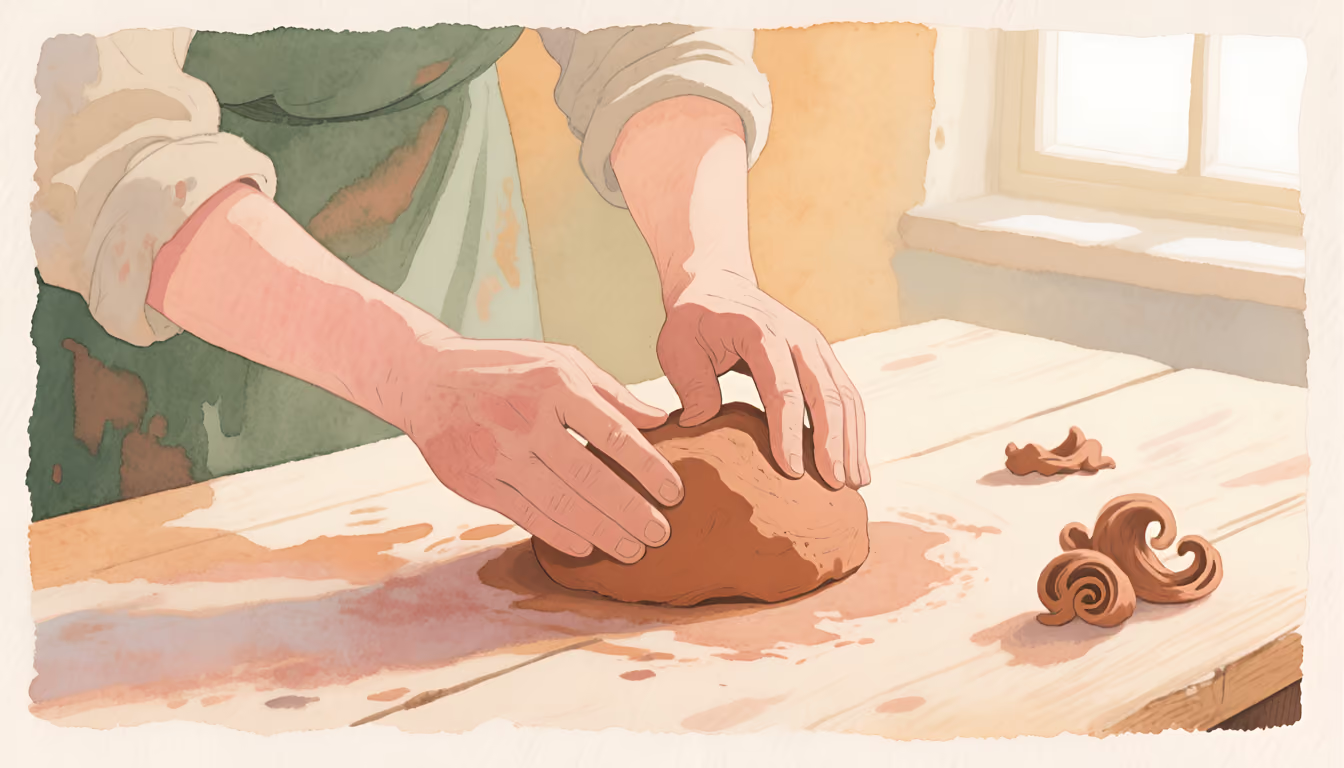
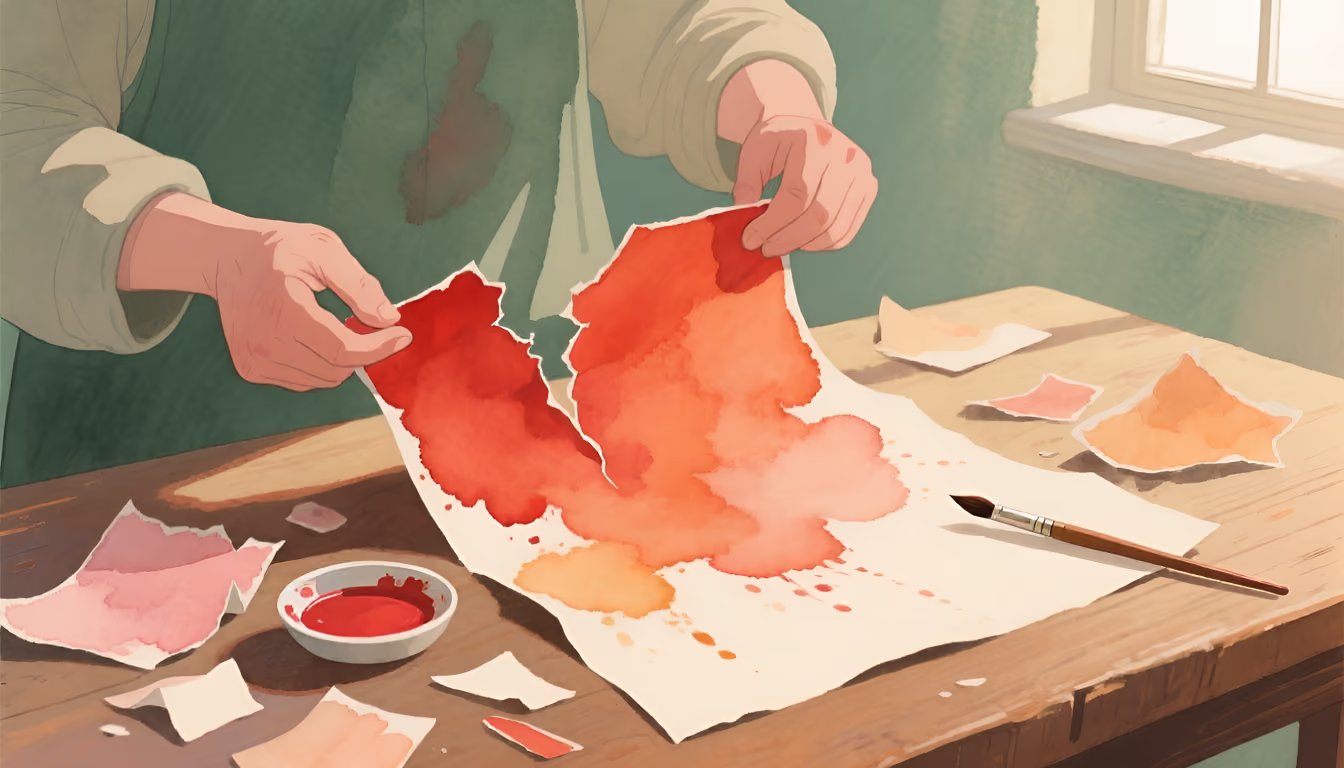
In a creative counselling session, there’s no requirement to explain the anger calmly before it’s allowed to exist. Sometimes it arrives first in the body, in a fist pressed into clay, in red paint dragged hard across paper, long before there are words for what it’s about. That order isn’t a problem to fix. It might be closer to how anger actually wants to be known.
How can creative counselling help process anger without talking it through first?
I’ve watched clients tear paper into small, deliberate pieces without once raising their voice, and I’ve watched others go quiet and still, working a lump of clay slowly, methodically, for the better part of an hour. Neither looks like what we usually picture when we picture anger. Both are anger, doing exactly what it needs to do somewhere that can hold it.
This is not a technique for letting off steam. It’s closer to giving a feeling a shape before asking it to become a sentence. In creative counselling for anger, what the hands do with a colour or a material can say something truer than the tidy explanation that comes afterwards, and sometimes no explanation comes at all, and that’s allowed too.
Why does anger show up differently in neurodivergent adults?
Anger is often the emotion neurodivergent adults are least permitted to have, and yet it’s frequently the most honest signal in the room. For someone with ADHD or an autistic adult who has spent years masking, anger can point to a boundary that was crossed, a need that went unmet for too long, or a version of masking that finally became unsustainable. Anger is a natural, information-carrying response, not a character flaw or a symptom to correct.
None of this means anger gets to move through the world however it likes, sessions still hold that too. But there’s a real difference between managing anger so it disappears and making room for it long enough to hear what it came to say.
Is anger something to manage, or something to listen to?
What matters most in these sessions is rarely the finished piece. A torn page, a reshaped lump of clay, a canvas covered in one colour and nothing else, none of it needs to look like anything for the work to have mattered. What moved through a person while they were making it is the part that counts.
What would it feel like to let anger take up space for a while, without rushing to smooth it into something more comfortable to look at?
Frequently Asked Questions
Is creative counselling for anger different from anger management?
Yes. Anger management usually focuses on containing or reducing anger. Creative counselling for anger starts from curiosity instead, working with colour, clay or movement to understand what the anger is pointing to, rather than simply bringing it down.
Do I need to know why I’m angry before starting?
No. Many people come to creative counselling for anger with no clear reason, just the feeling itself. Working with materials can often surface what’s underneath before a tidy explanation is possible, and sometimes the explanation never fully arrives, which is fine.
Is this approach suitable for neurodivergent adults?
Yes, it’s often especially well suited. Many neurodivergent adults find that anger has been misread or suppressed for years; a creative, non-verbal way in can feel far less demanding than being asked to explain feelings calmly on the spot.
Will I need to talk about my anger out loud?
Only as much as feels right. Sessions include conversation, but the materials, clay, paint, paper, are there so anger has somewhere to go before, during, or instead of being put into words.
What if my anger feels frightening or out of control?
If anger regularly feels frightening, unmanageable, or connected to thoughts of harming yourself or someone else, that’s a sign to reach out to your GP or a qualified professional directly, alongside or instead of this kind of reflective work.
A note on professional support
This reflection is offered as a way of thinking about anger, not as guidance for managing a mental health crisis. If anger regularly feels frightening, unmanageable, or connected to thoughts of harming yourself or someone else, please reach out to your GP or a qualified professional for support.
If any of this resonates, I’d love to hear from you. You can find out more about how sessions work on the Services page, or explore free reflective tools on the Resources page, before booking a free 20-minute introductory call, no pressure, no commitment after.