
Written by Ewa Mikrut, Transpersonal Arts Counsellor and Registered Member MBACP, working with young people and adults online and in person in Guernsey.
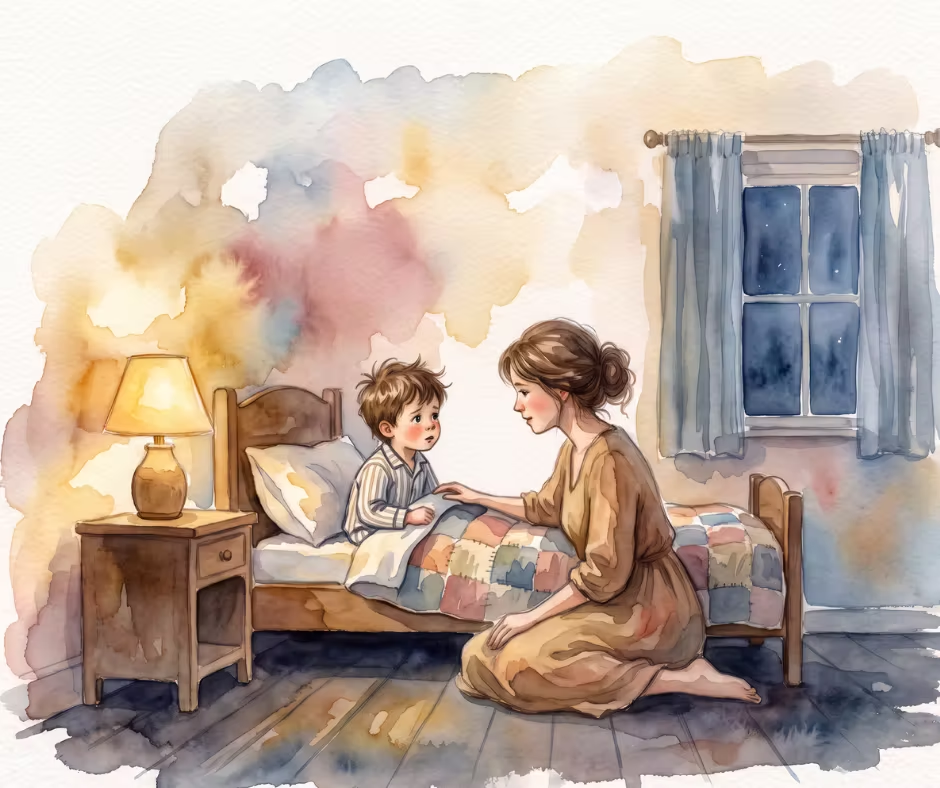
It is 8.40 pm. You have finished the story, tucked in the blanket and said goodnight. Then you hear small feet in the hallway again. Another drink. Another question. One more cuddle.
If your child keeps getting out of bed, you may begin to dread the evening before it has even started. You want your child to feel safe and loved. You also need a little time for yourself. Both of these matter, and holding them together is not easy at the end of a long day.
This guide is for parents and carers in Guernsey, across the UK and online, including families of autistic children and children with ADHD. Alongside it you will find Our Evening & Morning Rhythm, a free printable pack of illustrated routine boards and picture cards to cut out. The morning cards can also be used the evening before, so your child can see what tomorrow will bring.
Why does my child keep getting out of bed every night?
You may have come across the phrase "bedtime stalling", used for repeated requests and trips out of bed. It describes what happens, but it does not tell you why. So begin with the simple things: does your child need the toilet, a drink, or help with pain, itching or another discomfort?
If those needs are met, something else may be making it hard to settle:
- Saying goodnight feels difficult. Your child may want reassurance about where you will be and what happens next.
- The change of pace is hard. Stopping an activity, or moving from a busy day into a quiet bedroom, can take support. Light, sound, clothing or bedding may also feel uncomfortable.
- Your child wants time with you. Bedtime may be one of the few moments in the day when you are together without other demands. Or they may simply not feel sleepy yet.
- Tomorrow feels uncertain. Your child may be wondering where they are going, who will be there, or who will collect them. Sometimes it is not the next bedtime step that needs explaining, but the next morning.
In more than five years of working alongside autistic and ADHD children and young people, I have learnt that the same request can carry very different meanings. Sometimes another glass of water is a quiet way of asking, "Are you still there?" And sometimes your child is simply thirsty. Try not to decide what the request means before you have gently checked.
Is bedtime stalling normal, or is something else going on?
An occasional difficult bedtime does not, on its own, tell you that something is wrong. It helps to look at the wider pattern: when the difficulty began, what else has changed recently, and how your child is managing during the day.
For autistic children and children with ADHD, it can be especially useful to think about sensory comfort, transitions and how clear the plan feels. There is no single routine that suits every neurodivergent child. Your child's responses are the best guide to the adjustments you make, and what helps one child may unsettle another.
Speak to your GP or your child's healthcare professional if sleep difficulties persist or are affecting health, mood or daily life. Loud, regular snoring, pauses in breathing or gasping during sleep always need medical assessment; the NHS Healthier Together guide to snoring and obstructive sleep apnoea in children explains what to look out for. Your GP is also the right person to ask about medication or sleep supplements, including melatonin.
If your child keeps getting out of bed night after night, it helps to stay curious about what they might need, rather than treating every request in the same way.
How do I stop bedtime battles without shouting?
When everyone is tired, even a small decision can turn into a long negotiation. A familiar sequence gives you both something simple to return to, without explaining the whole evening again.
My own approach is shaped by my training at the Tobias School of Art and Therapy and by the Waldorf understanding of rhythm. I like to think of the evening as a slow breathing in after the busy breathing out of the day: a gradual change of pace, rather than a sudden instruction to stop and sleep. This is a way of shaping the evening with warmth, not a treatment for sleep difficulties.
A visual routine can make the next step easier to understand. It will not remove every disagreement, and it cannot explain every reason a child is struggling. What it does give you is something to look at together, side by side, instead of facing each other across the doorway.
Keep choices small and genuine: "These pyjamas or those?" or "This book or that one?" You can listen to your child's preference while still keeping a clear and calm plan for the evening.
What should a bedtime routine for children include?
A bedtime routine for children works best when it is short, familiar and kind. It does not need to be elaborate. Our Evening Rhythm uses five simple moments:
- Toys to bed. Put a few toys in their resting place. You might say, "The toys are going to bed too." This is a small transition, not a demand to tidy the whole room.
- Wash and brush. A little wash and clean teeth. Adapt the order to the routine you already have.
- Get cosy. Pyjamas on, and a quick check that clothing, bedding and the room feel comfortable.
- A story together. A book, or some quiet time side by side. A cuddle is there if your child wants one, never a requirement.
- Our goodnight. Familiar words, and a clear and honest picture of what you will do next. Choose a plan you can realistically keep, whether that means sitting nearby for a while or leaving with an agreed check-in.
You can change the order, leave out a card, or use the pictures without the board. The cards are there to support your evening, not to become another set of rules to get right.
The free printable pack includes matching evening and morning routines. There are no forms to fill in, no scores to keep and no rewards to earn. Simply print it, choose the cards you need and arrange them together with your child.
Could my child be worrying about tomorrow?
Sometimes a child cannot settle because they do not know what the next day will bring. You may hear the same question several times: "Is it a school day?" "Who is taking me?" "Are you picking me up?"
Not every difficult bedtime is about tomorrow. But if these questions keep returning, it is worth making a little room for them before you say goodnight.
Try looking at the morning cards together earlier in the evening. Choose the steps that fit, then add the card that shows what happens next: school, nursery, a day at home or going out. A short, familiar explanation is often enough:
"Tomorrow we will get up, get dressed and have breakfast. Then I will take you to nursery. Grandma will collect you after lunch."
Only include what you know for certain. If you are unsure about something, say so. If plans change, explain the change and swap the card. The pictures show the current plan; they are not a promise that nothing can change.
If a photograph of the actual place is clearer than an illustration, use that instead. Many autistic children find real photographs easier to read, and Sheffield Children's NHS has helpful guidance on using visual timetables. There is no need to rehearse the whole day, or to keep going until your child seems completely reassured. Listen to what they ask, and keep the plan simple.
The cards cannot take every worry away. If anxiety is persistent, or is affecting sleep and daily life, it is a sign to look for individual support rather than adding more detail to the routine.
Download Our Evening & Morning Rhythm
The free seven-page pack includes:
- an evening example, an evening board and five matching cut-out cards
- a morning example, a morning board and six matching cut-out cards
- four interchangeable destination cards: school, nursery, a day at home and going out
Use reusable adhesive or hook-and-loop dots to attach the cards, or simply lay them in a row without the board. An adult should do the cutting, and small adhesive pieces should be kept out of reach of young children. You only need to print the pages you want to use.
Download your free routine pack
What is a bedtime pass, and should we use one?
A bedtime pass is a card a child can exchange for one agreed extra request after bedtime, such as a hug or a drink. It has been studied as part of a wider behavioural programme, not simply as a card offering reassurance.
A small randomised controlled trial by Moore and colleagues, published in the Journal of Pediatric Psychology in 2007, examined the Bedtime Pass Program. In the studied versions, further calls for attention are ignored once the pass has been used. That is an important detail for parents to know, and findings from a small study should not be assumed to apply to every child.
A bedtime pass is not included in this printable pack. If you are considering one, talk it through with a suitably qualified professional who knows your child. A card should never stop a child from getting help for pain, illness, fear or a toilet need.
How can a creative ritual help a worried child let go of the day?
If your child enjoys drawing or talking, you can offer a small moment earlier in the evening to share something from the day. It does not need to happen just before sleep.
You might offer one of these invitations, rather than working through a list of questions:
- "Is there anything from today you would like me to know?"
- "Would you like to draw something from your day?"
- "Is there anything you want to ask about tomorrow?"
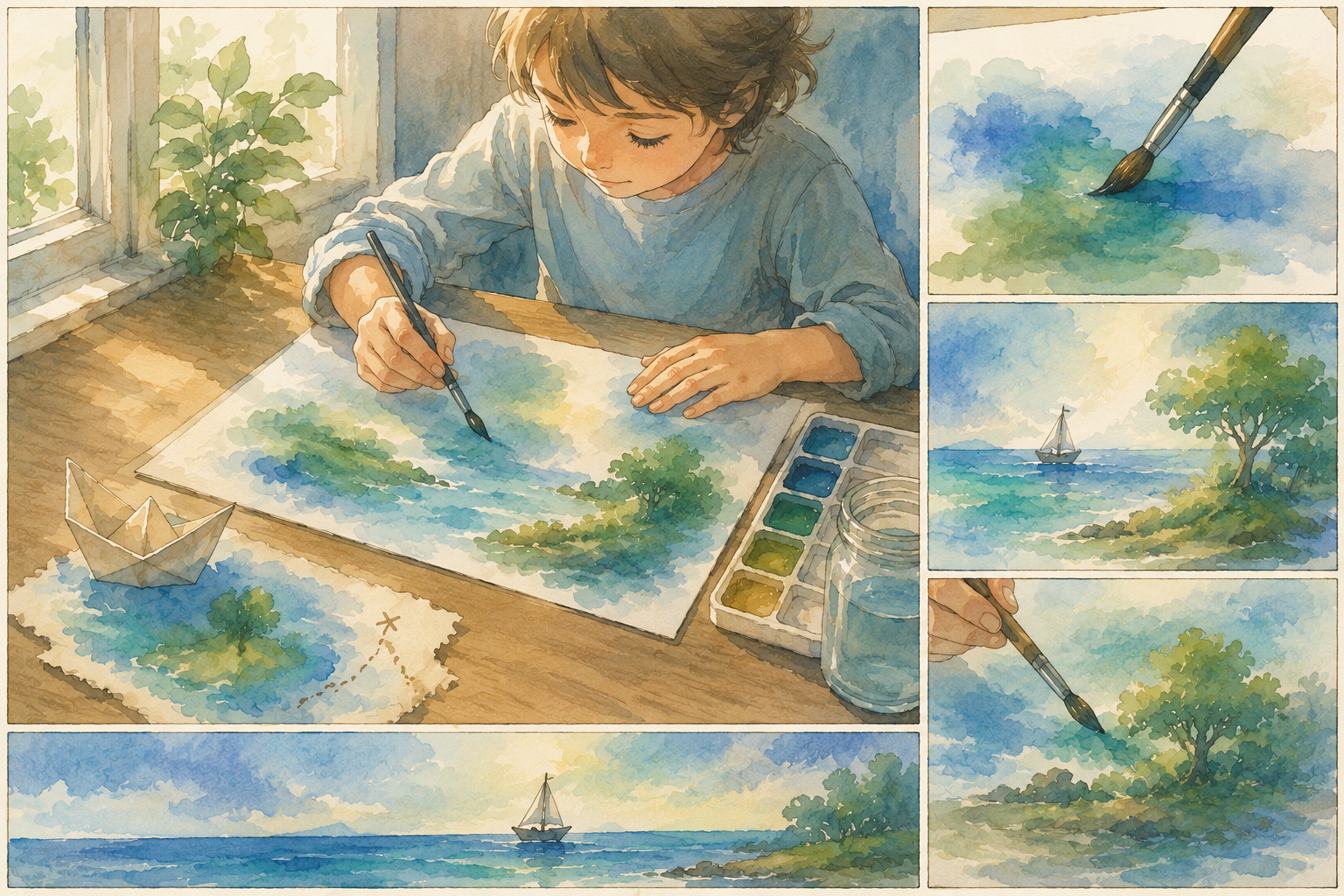
Your child can talk, draw, keep a picture private or say no. In my work I often see that a few lines of colour can hold something a child is not yet ready to say out loud. The drawing does not have to make a worry disappear to be worth making; what matters is the making itself, and that someone is there with them while they do it. If something difficult comes up, listen. If it needs more time, agree when you will come back to it together. And if this moment makes the evening feel busier, or your child does not enjoy it, simply leave it out.
Please make room for yourself in the plan, too. You do not need to be perfectly calm to care for your child well. A difficult evening is not a verdict on your parenting.
Frequently Asked Questions
Why does my child keep getting out of bed after I say goodnight?
There can be several reasons: a physical need, discomfort, wanting company, not feeling sleepy, or worries about what happens next. Gently ask and observe rather than assuming every request means the same thing.
How long does it take for a new bedtime routine to work?
There is no fixed timescale. Notice whether the sequence is becoming easier to follow and whether it suits your child. If difficulties persist or affect daily life, seek advice rather than making the routine longer and more complicated.
Should I take my child back to bed every time they get up?
Check what they need first. If they are comfortable and there is no new concern, calmly help them back and return to your agreed plan. Always respond to distress or illness rather than treating every trip out of bed in the same way.
Do visual bedtime charts help autistic or ADHD children?
Many autistic children and children with ADHD find a visual routine helpful, because the pictures make the evening easier to follow without lots of spoken instructions. Keep the sequence manageable and adapt it to your child's understanding and sensory preferences. Some children prefer photographs of their own belongings or familiar places to illustrations.
Can we use the morning cards before bedtime?
Yes. If your child is wondering about tomorrow, choose the morning cards together earlier in the evening and include the picture showing what comes after getting ready, such as school, nursery or a day at home. Keep the explanation brief and leave space for questions.
A note on professional support
This article and the printables are for general information. They are visual aids, not a treatment or a reward chart, and they are not a substitute for an individual assessment. Speak to your GP or your child's healthcare professional if you are concerned about sleep, breathing, anxiety or how your child is managing during the day.
If evenings have become a source of tension in your home, you do not have to work it out alone. I offer support for parents and carers, online or in person in Guernsey. Together we can look gently at what is happening for your family and find a rhythm that feels more manageable for everyone.
Download Our Evening & Morning Rhythm, the free illustrated routine pack with ready-made examples, boards and cut-out cards. And if any of this resonates, you are welcome to book a free introductory call.