
Written by Ewa Mikrut, BACP Member & Expressive Arts Counsellor specialising in ADHD, autism in children, young people and adults.
If you have been thinking about counselling in Guernsey but are not sure where to begin, or whether talking would even help, creative counselling offers a gentler way in. You don't have to find the right words straight away. You can start with colour, image or story, at your own pace, in a space that is entirely yours.
I offer creative counselling in Guernsey in person, and online across the UK, for teenagers, young people, parents and neurodivergent adults, including people with ADHD and autism. Sessions are available in English or Polish.
What is creative counselling?
Creative counselling is a form of counselling that uses art materials, image, movement and story alongside conversation, to help people explore feelings and experiences that are hard to put into words. It is sometimes called expressive arts counselling.
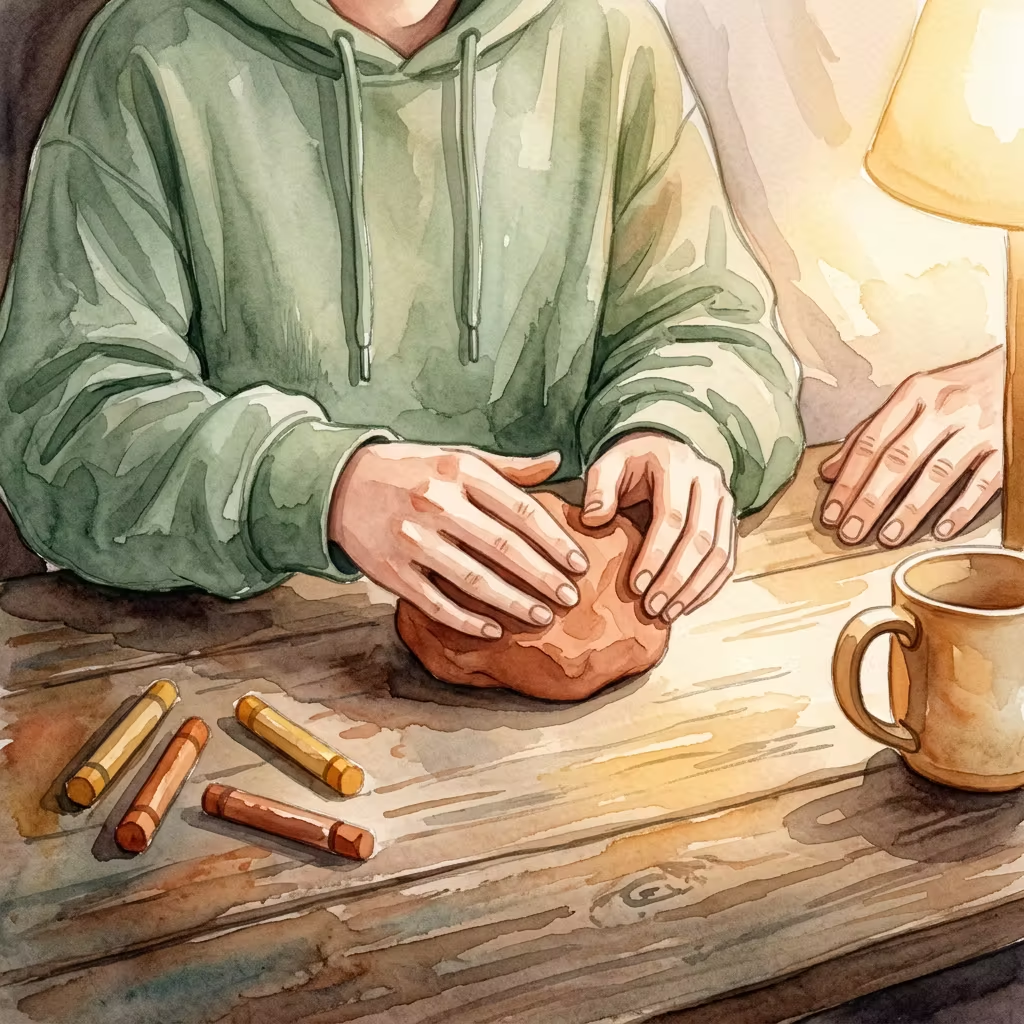
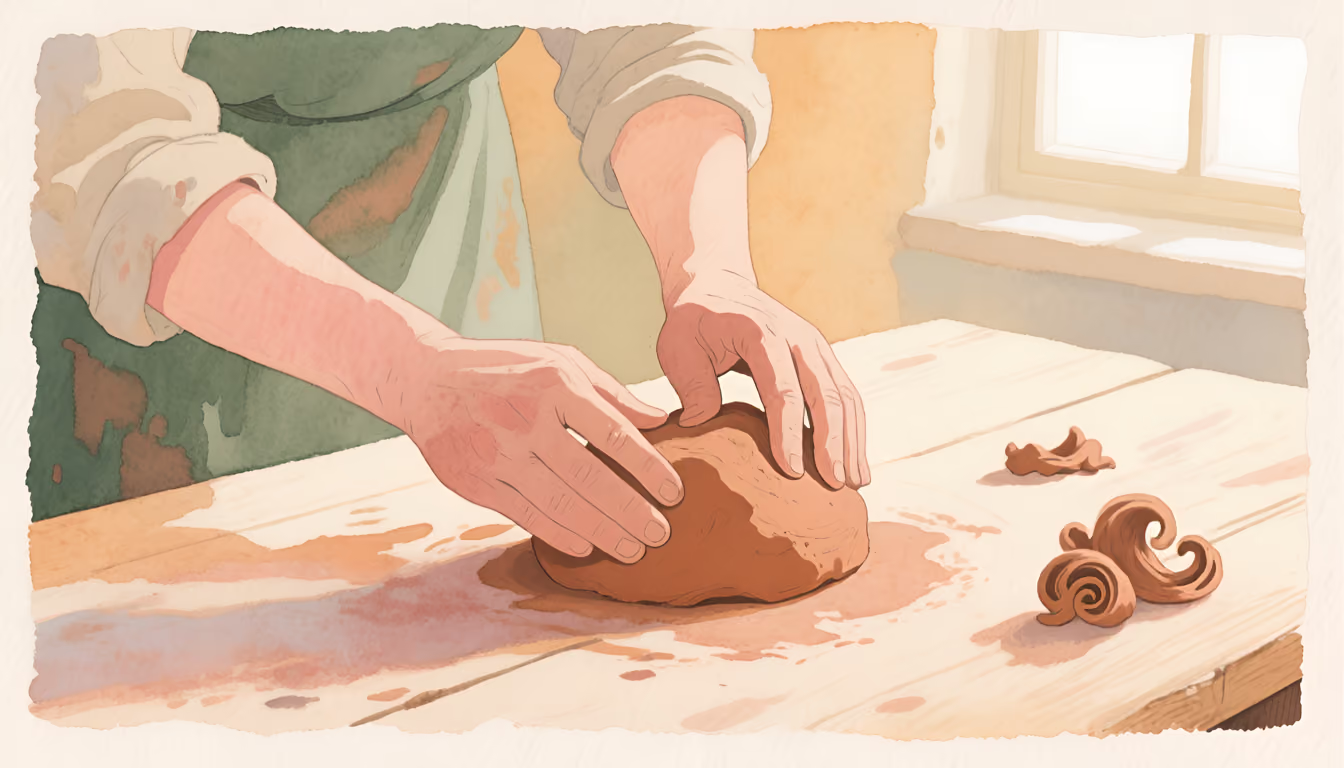
You don't need to be artistic, and nothing you make will be judged. In a session you might draw the shape of a difficult week, work with clay while we talk, or choose colours for a feeling that has no name yet. Then we look at what came, together, and only as far as feels right.
In the tradition I trained in at the Tobias School of Art and Therapy, art is not a technique for calming down or a set of exercises. It is a language the inner life already speaks. What matters is what moves in you while you are making, not how the finished piece looks.
Put simply: creative counselling gives a feeling somewhere to land before it has to become a sentence.
Who is creative counselling in Guernsey for?
Creative counselling suits people for whom ordinary talking has felt too hard, too fast or simply not enough. In my work, that often includes:
- teenagers and young people who go quiet when asked how they feel
- neurodivergent adults with ADHD or autism, especially those tired of masking or late to their diagnosis
- parents of neurodivergent children who are carrying a great deal and rarely have space for themselves
- people living through change, loss, anxiety or a sense of being overwhelmed
- Polish-speaking islanders who would find it easier to explore feelings in their first language
ADHD and autism are natural variations in how people think, feel and learn, not problems to be fixed. Counselling is not about changing who you are. It is about understanding yourself more kindly and finding steadier ground.
If you are a parent wondering whether your child or teenager is ready, you may find it helpful to read about counselling for teenagers with ADHD.
Will people on the island know I am having counselling?
This is one of the first worries people share with me, and it makes complete sense. Guernsey is a small place. You may bump into your counsellor in the supermarket or at the harbour, and the idea of being seen walking into a counselling room can be enough to put you off altogether.
Counselling is confidential. What you share stays between us, with a small number of exceptions that I explain clearly at the start, such as a serious risk to your safety or someone else's. If we meet by chance in town, I will not greet you first or mention our work, so you can decide what feels comfortable.
For some islanders, online sessions are the most private option of all. You can join from home, with no one seeing you arrive or leave. You are welcome to choose whichever feels safer, and to change your mind later.
How do I start counselling in Guernsey?
Starting counselling in Guernsey with me usually follows a simple, unhurried path:
- Get in touch by email or through the contact form, with as much or as little detail as you like.
- Book a free 20-minute introductory call, where you can ask questions and see how it feels to talk with me.
- If it feels right, we agree on in-person or online sessions, a regular time and how often to meet.
- Your first session is mostly about getting to know each other, with no pressure to share everything at once.
- We review together how things are going, so the work keeps fitting what you need.
You don't need a referral from your GP to start private counselling. You also don't need to know exactly what is wrong. Many people begin with "I just don't feel like myself", and that is a perfectly good place to start.
Should I choose online or in-person counselling?
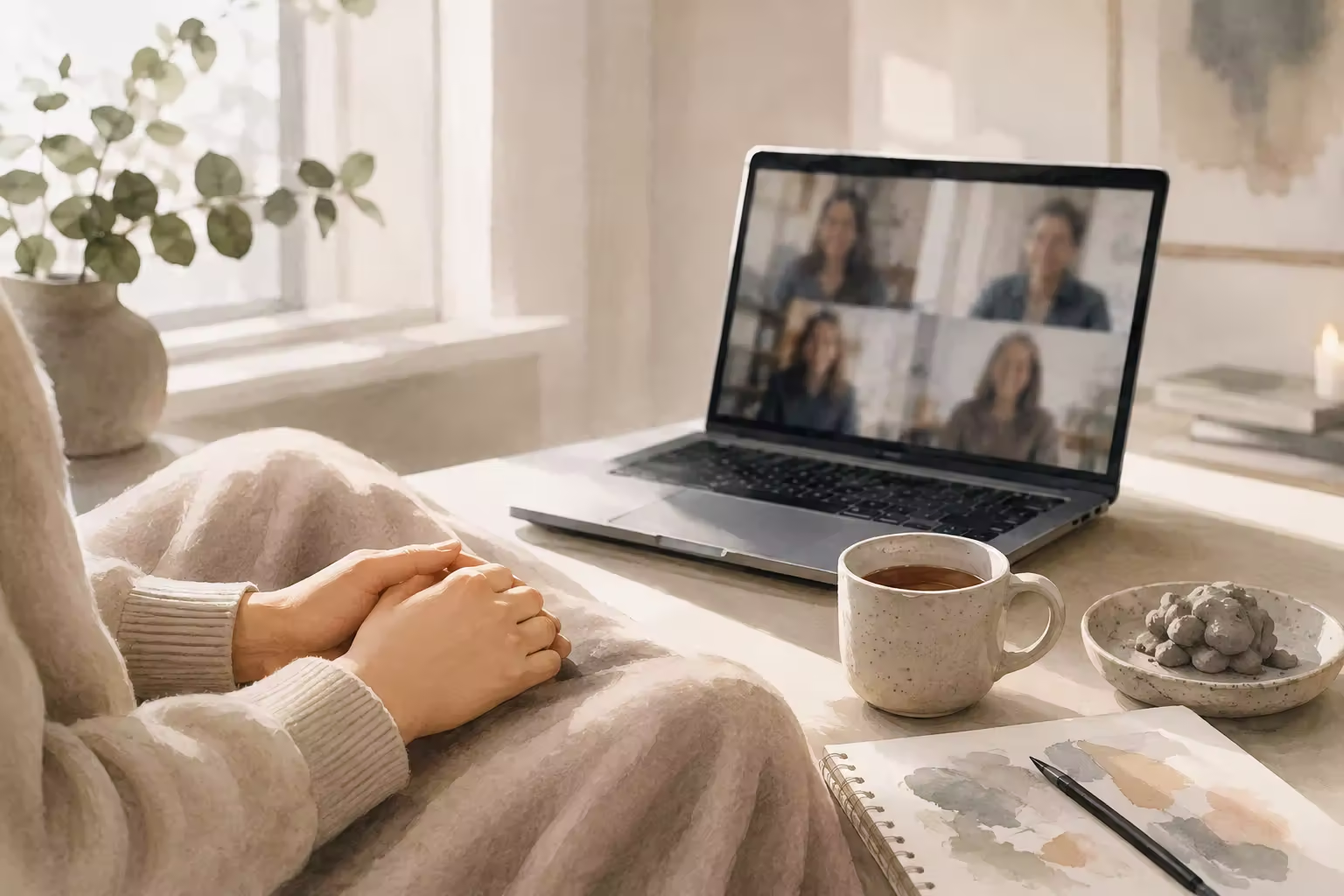
Both can work well, and the right choice is the one that makes it easier for you to keep coming. In-person sessions in Guernsey give you a separate space away from home, with materials laid out and room to move. Online sessions let you stay somewhere familiar, which many autistic adults and anxious teenagers find much less tiring.
In online creative counselling, a few simple materials at home are usually enough: paper, some crayons or pastels, perhaps a little air-dry clay. You can point the camera at the page rather than your face if that feels easier. I've written more about why sessions at home often work so well.
It can help to sit with one question for a moment: where do you feel most like yourself? That is often the best place to begin.
Frequently Asked Questions
Do I need a GP referral for counselling in Guernsey?
No. You can contact a private counsellor in Guernsey directly without a GP referral. If you are also concerned about your physical or mental health, it is still a good idea to speak to your GP alongside counselling.
How much does private counselling cost in Guernsey?
Fees vary between counsellors and depend on the type and length of session. You can find my current session types and fees on my Services page, and the first 20-minute introductory call is always free.
Can I have counselling in Polish in Guernsey?
Yes. I offer creative counselling in both Polish and English, in person in Guernsey and online. Many people find it easier to explore feelings in the language they grew up with.
Is counselling confidential on a small island like Guernsey?
Yes. What you share in counselling stays confidential, with limited exceptions such as a serious risk to someone's safety, which your counsellor should explain at the start. Online sessions from home can offer extra privacy if you are worried about being seen.
Do I need to be good at art for creative counselling?
Not at all. Creative counselling is about expression, not skill, and nothing you make is judged. Many people who say they can't draw find that the materials help them say things words alone could not reach.
A note on professional support
This article is general information and is not a substitute for professional assessment or medical advice. If you are struggling with your mental health, your GP is a good first step, and Mind offers clear information about different kinds of support.
If you or someone else is in immediate danger, call 999 or go to the Emergency Department at the Princess Elizabeth Hospital. Samaritans are available free, day or night, on 116 123, and you can text SHOUT to 85258 for confidential support.
If any of this resonates, I'd love to hear from you. You can read more about creative counselling in Guernsey and online, or book a free 20-minute introductory call to see whether working together feels right. There is no pressure, and no need to have the right words ready.